
Copyright © Media Law International 2026. All Rights Reserved. Privacy Policy Contact Us Unsubscribe
Guide to the Global Leaders in Media Law Practice


REGIONS WE COVER
Middle East and North Africa
North America
Asia-Pacific
Western Europe
Central and Eastern Europe
In Russia, the media sector is regulated by the following:
- the Constitution of the Russian Federation (Article 29.5);
- the Federal Law on Mass Media No. 2124-1 dated 27 December 1991 (as amended) (Mass Media Law);
- the Federal Law on Information, Information Technologies, and Data Protection, No. 149 dated 27 July 2006 (as amended) (the Information Law); and
- other specific laws (the Federal Law No. 38-FZ On Advertising of 13 March 2006 (as amended) (the Advertising Law), the Federal Law No. 152-FZ On Personal Data dated 27 July 2006 (as amended) (the Data Protection Law), the Federal Law No. 436-FZ On Protection of Children from Information Harmful to Their Health and Development of 29 December 2010 (as amended) (the Children Protection Law), the Federal Law No. 126-FZ On Communications of 7 July 2003 (as amended) (the Communications Law), the Federal Law No. 114-FZ On Countering Extremist Activity of 25 July 2002 (as amended).
The principal state authority, which is competent to secure, control and monitor local mass media legal compliance is the Federal Service for Supervision of Communications, Information Technology and Mass Media (Roskomnadzor).
There are other state authorities responsible for providing state services and management of state properties in the media sector, such as the Ministry of Digital Development, Communications and Mass Media, the Federal Antimonopoly Service, the Ministry of Culture.
Foreign ownership with regards to media services is seriously restricted. Foreign companies cannot hold more than a 20 per cent share in a local media company (unless otherwise provided for by an international treaty of the Russian Federation). Any 100 per cent equity forms of foreign participation or foreign corporate control over the Russian media business are prohibited.
In terms of specific regulated activities, the national media sector is subject to:
- registration – for various media-products, including online editions (websites);
- licensing – for distribution (broadcasting) of media;
- permits – for distribution of foreign printed products (editions);
- approvals on theallocation of frequency bands – for broadcasting of media using the RF- spectrum.
Media lawyers should note these significant laws and regulations adopted in 2025–2026, affecting advertising, content moderation, and platform operations:
- Internet Advertising: Beyond labeling rules, a 3% tax on internet ad revenue is now in force.
- Blogger Registration: Bloggers with over 10,000 subscribers must register with Roskomnadzor; non-compliance risks blocking, ad restrictions, and limits on reposting content.
- VPN Advertising Ban: Advertising VPN services is prohibited.
- Business Call Labeling: Amendments to the Communications Law mandate labeling of business calls.
- Prohibited Platforms: Ads are banned on "prohibited" resources, including Instagram, Facebook, and similar social networks.
- Tightened Ad Rules: Stricter requirements apply to advertising energy drinks and bankruptcy-related services.
- Extremist Content Liability: Administrative penalties now apply for intentionally searching federally listed extremist materials online. Media must disclose that extremist organizations' activities are banned when reporting on them.
- Streaming and Social Media Content Controls: Streaming service owners cannot distribute audiovisual works that discredit Russia's traditional spiritual and moral values or promote their negation; they must comply with Roskomnadzor orders to remove such content. Social network owners must monitor platforms, identify works lacking/revoked distribution certificates or flagged as prohibited, and restrict access on user pages.
- Space Advertising: Roscosmos can now offer services to place ads on its space objects, including production and distribution.
Media law is constantly developing in Russia and we continue monitoring the applicable legal amendments to assess consequences and their potential impact on the business.
Written by
Sergey Medvedev and Nikita Maltsev
Gorodissky & Partners
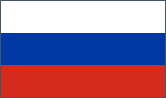
RUSSIA
COUNTRY CHAPTER
2026 RANKINGS

TIER 2
EPAM Law Offices
Legal Bureau Omega
LUMIERES Legal
TIER 3
Alumni Partners
Mikhailyuk, Sorokolat & Partners
LEADING LAWYERS
Maria Ostashenko, Alrud
Ilya Goryachev, Gorodissky & Partners
Julia Sycheva, LUMIERES Legal
Yuriy Korchuganov, MGAP Attorneys at Law
Uvarkin Gennady Igorevich, Omega





GLOBAL
RECOGNITION